
What Is Antifouling Paint and How Does It Work?
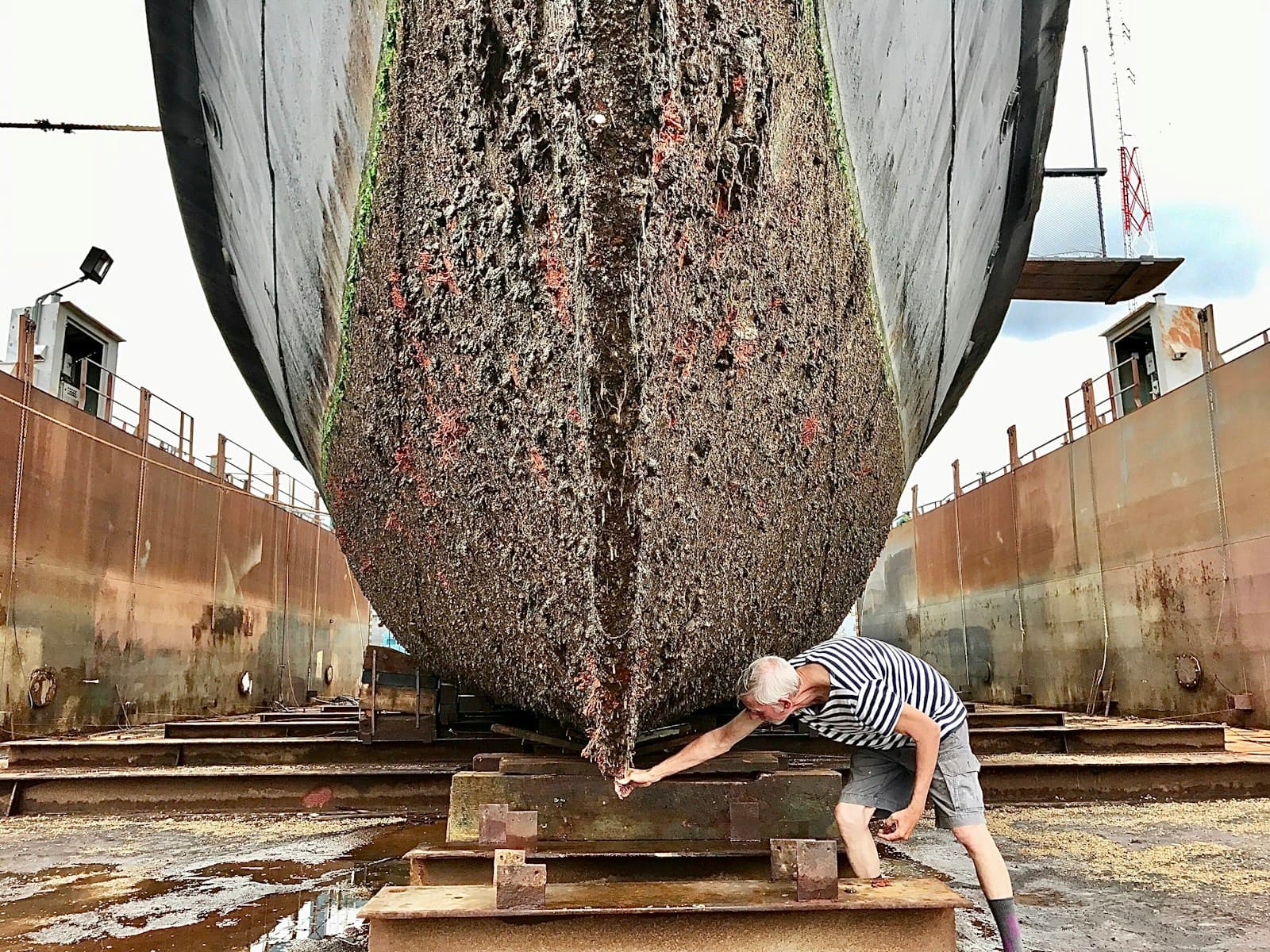
Any surface left in water soon begins to be covered by algae, mussels, barnacles and similar marine organisms. This build-up is called "fouling". A fouled hull has greater resistance in the water, which reduces speed and significantly increases fuel consumption.
How does antifouling work?
Antifouling paints form the outermost layer of the underwater hull and prevent organisms from attaching to the surface. Two approaches are commonly used: paints that release biocides in a controlled way to prevent attachment, and biocide-free (foul release) systems whose slippery surfaces allow organisms to detach easily while the vessel is under way.
Is it sufficient on its own?
No. Antifouling is the final layer of a multi-coat system. Beneath it are anti-corrosive epoxy primers and intermediate coats that protect the steel against salt water. Antifouling must not be applied directly to bare steel or to an incompatible undercoat.
Timing of application
Antifouling paints are usually applied when the vessel is dry-docked. The minimum and maximum launch times specified by the manufacturer must be observed; otherwise the effectiveness of the paint may be reduced.
How often is it renewed?
Depending on the operating profile, water temperature and the system used, underwater paints are generally renewed during dry-docking periods. Regular diver inspections and hull cleaning extend the life of the system.
Contact us to determine the right anti-corrosive and antifouling system for your ship, boat or marine structure.