
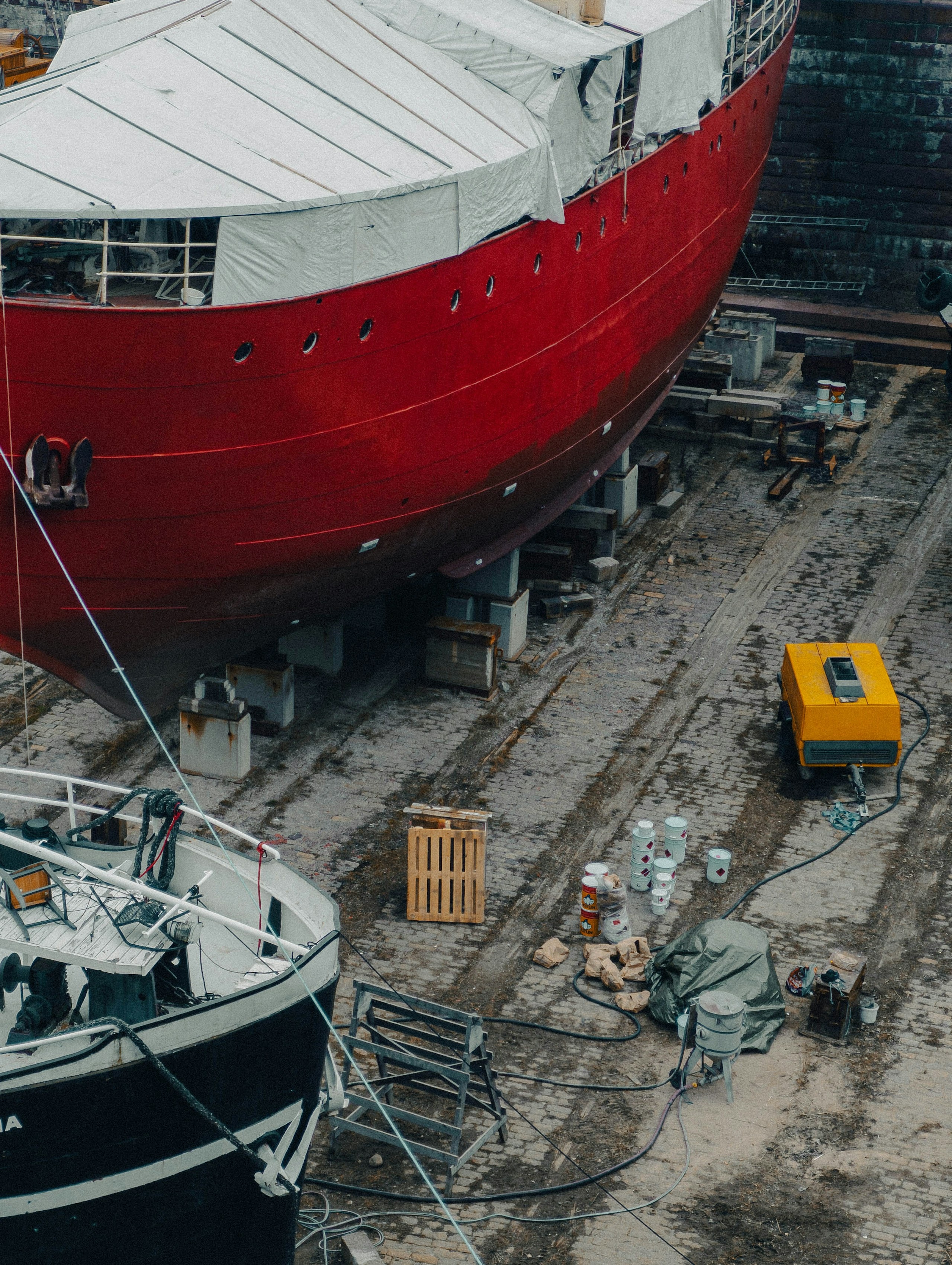
Marine Paint and Protective Group
Protective paint systems for ships and marine structures against the harsh conditions of the marine environment.
System
Multi-coat epoxy, polyurethane, antifouling
Application
Airless spray, brush, roller
Environment
Marine atmosphere, underwater and above water
What is the Marine Paint and Protective Group?
The marine environment is one of the harshest conditions for paints due to salt water, high humidity, UV radiation and wave action. The marine paint and protective group consists of multi-coat systems that protect steel against corrosion for long periods under these conditions.
On the underwater hull, non-toxic or biocidal antifouling paints that prevent marine organisms from attaching are applied over anti-corrosive epoxy primers. On the topsides, decks and superstructures, epoxy intermediate coats and highly UV-resistant polyurethane topcoats are used.
Key Features
- Resistance to salt water and marine atmosphere
- Long-term anti-corrosive protection
- Protection against fouling by marine organisms
- Anti-slip options for decks
- Resistance to harsh weather
- Long service life that extends maintenance intervals
Protection layer by layer
Anti-Corrosive Primer
An epoxy or zinc-rich primer applied to blast-cleaned steel that provides the basic protection against salt water.
Barrier Intermediate Coat
A high-build epoxy intermediate coat prevents water and oxygen from reaching the steel.
Antifouling / Topcoat
Antifouling that prevents marine organisms from attaching underwater; above water, a polyurethane topcoat that retains color and gloss.
Where is it used?
The right start, a long life
- 01
The steel surface must be free of salt, oil and dirt; salt residues must be removed by washing with fresh water.
- 02
The surface should be prepared by abrasive blasting to Sa 2½ according to ISO 8501-1, with a suitable surface profile.
- 03
After blasting, the surface should be primed promptly before flash rust forms.
What to watch out for during application
- 01
Application must be carried out when relative humidity and surface temperature are above the dew point.
- 02
The dry film thickness of each coat must be measured to check the system thickness.
- 03
Antifouling paints must be applied within the time specified by the manufacturer before the vessel is launched.
Mixing ratio, pot life and recoat intervals vary by product; the product's technical data sheet should always be used for exact values.
About the Marine Paint and Protective Group
Contact us to determine the right system for your project together.