
Epoxy Floor Coating: A Step-by-Step Application Guide
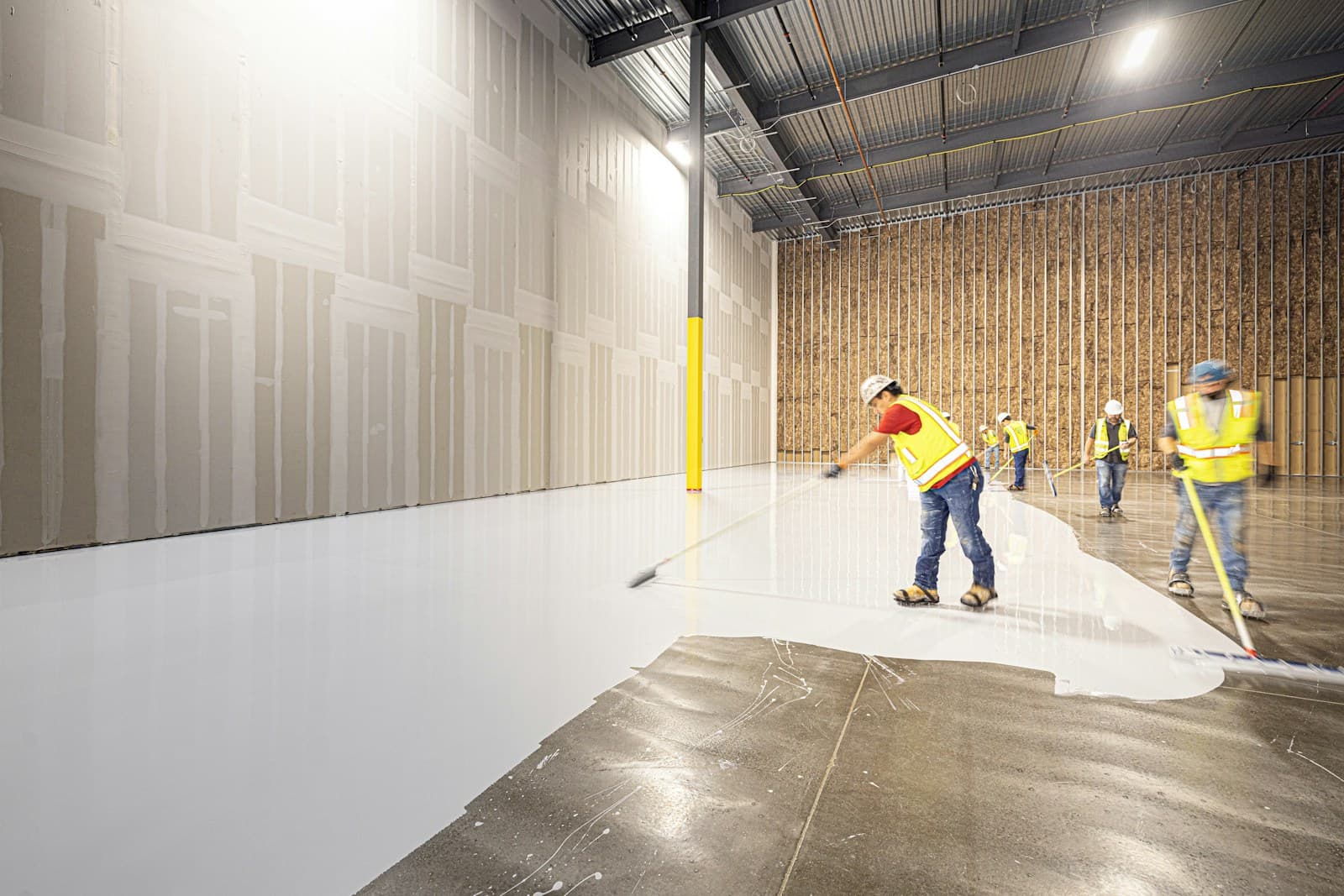
Thanks to their dust-free, easy-to-clean surfaces that resist chemicals and abrasion, epoxy floor coatings are among the most popular solutions for factories, warehouses, workshops and production areas. However, the life of the coating depends largely on the work done before and during application.
1. Assessing the floor
The concrete floor should be at least 28 days old, and surface moisture should be below the limit recommended by the manufacturer. Rising damp is the most common cause of coatings blistering over time. The compressive strength of the floor and the soundness of the surface should also be checked.
2. Surface preparation
Weak laitance, oil, paint residues and dirt on the concrete surface are removed by diamond grinding or shot blasting. The aim is to obtain a clean, sound and slightly rough surface so that the coating bonds mechanically to the concrete. Cracks and voids are repaired with epoxy mortar, and the surface is then completely freed of dust.
3. Primer application
The epoxy primer penetrates the pores of the concrete, consolidates the surface and ensures adhesion of the upper coats. On very absorbent floors, two coats of primer may be needed.
4. Intermediate and top coats
There are two main methods depending on the intensity of use: thin-film coatings applied by roller for light and medium traffic, and 2–3 mm self-leveling systems for areas with heavy forklift traffic or where a smooth appearance is desired. In self-leveling systems, air bubbles are released with a spiked roller. Where slip resistance is required, quartz sand is broadcast to create surface texture.
5. Curing and returning to service
Epoxy cures depending on the ambient temperature. Typically, 24 hours are needed for foot traffic and about 7 days for full mechanical and chemical resistance. These times are longer in cold conditions; exact values are given in the product's technical data sheet.
To choose the right system, simply tell us the purpose of the floor, the traffic intensity and the chemicals it will be exposed to.